FURTHER READING
Further Reading for Kiro
Tutorials, documentation and walkthroughs for designing with Kiro, as listed in the published guide.

 Kiro
Kiro  OpenDesign
 How to design interfaces with Kiro in OpenDesign: a spec before any code, steering files for copy and error handling, one checkout task from brief to reviewed file, and the limits to know before you start.

“A checkout built from the spec,
not from a mood board.”
THREE WAYS INTO THIS KIRO GUIDE
This guide: brief, references, design rules and a reviewed HTML result.
Read this guide SETUPHere is the full path from a clean machine to a Kiro CLI that can build and verify UI.
Go to setup COMPARISONHow Kiro differs from Codex, Claude Code, Cursor for design work, and when to choose another workflow.
See the comparisonOne Complete Kiro Design Task
A single task, shown end to end: the brief and constraints you hand over, the artifact that comes back, and the checks you still run before it is done. The interface below is an illustrative example built for this page, not a recorded Kiro run.
BriefDesign a two-page checkout from the attached spec: shipping and payment, with an order summary that stays visible. Follow the steering files for copy and error handling. Desktop and phone.
data-od-id hooksWrite the brief, select the design system and define the acceptance criteria.
Plans the layout, writes the HTML, CSS and JavaScript and revises it on request.
Provides the design system and skill, renders the preview and stores every version as a file in the project.
Visual hierarchy, spacing on the 8px grid, both breakpoints and every interaction are checked before handoff.
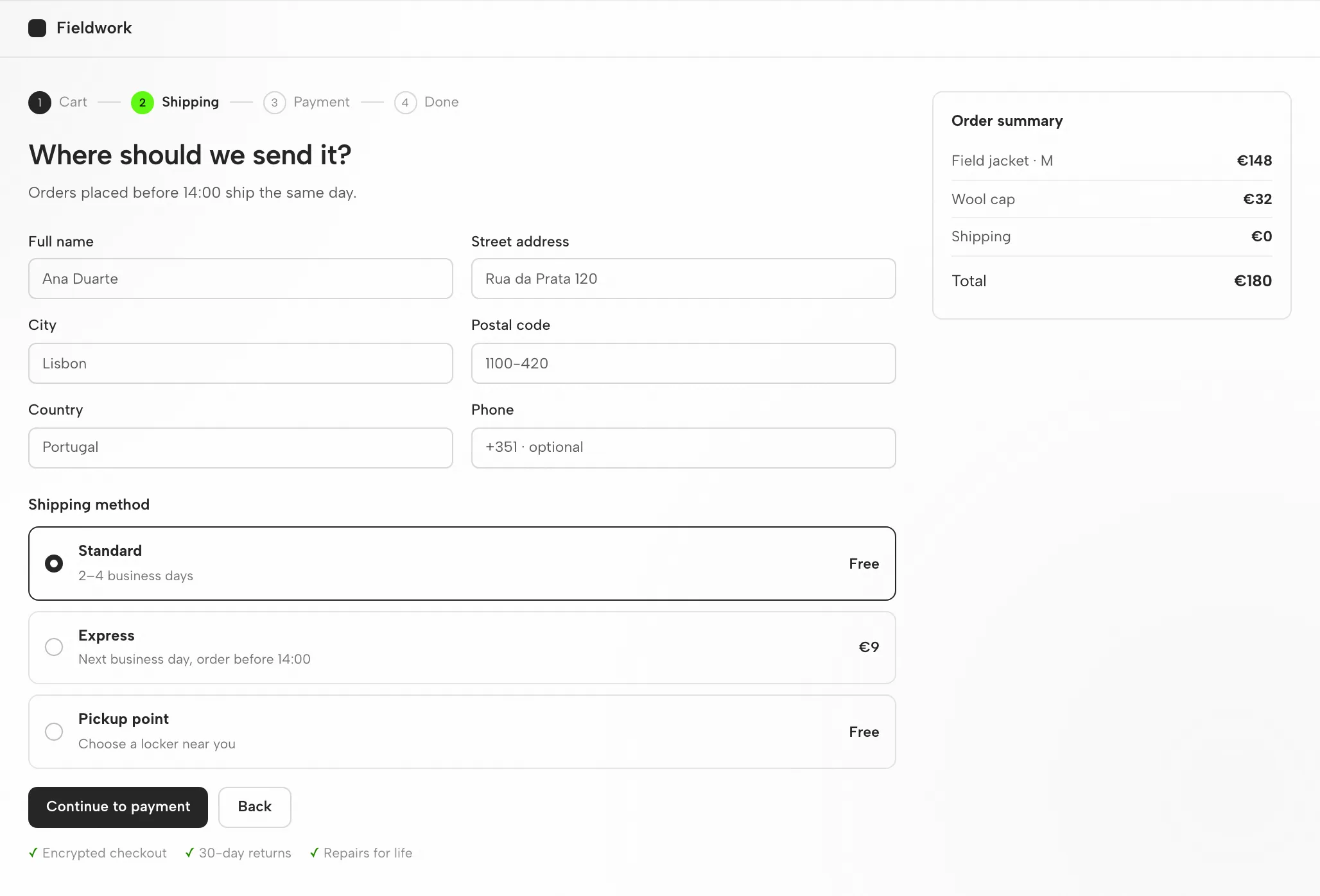
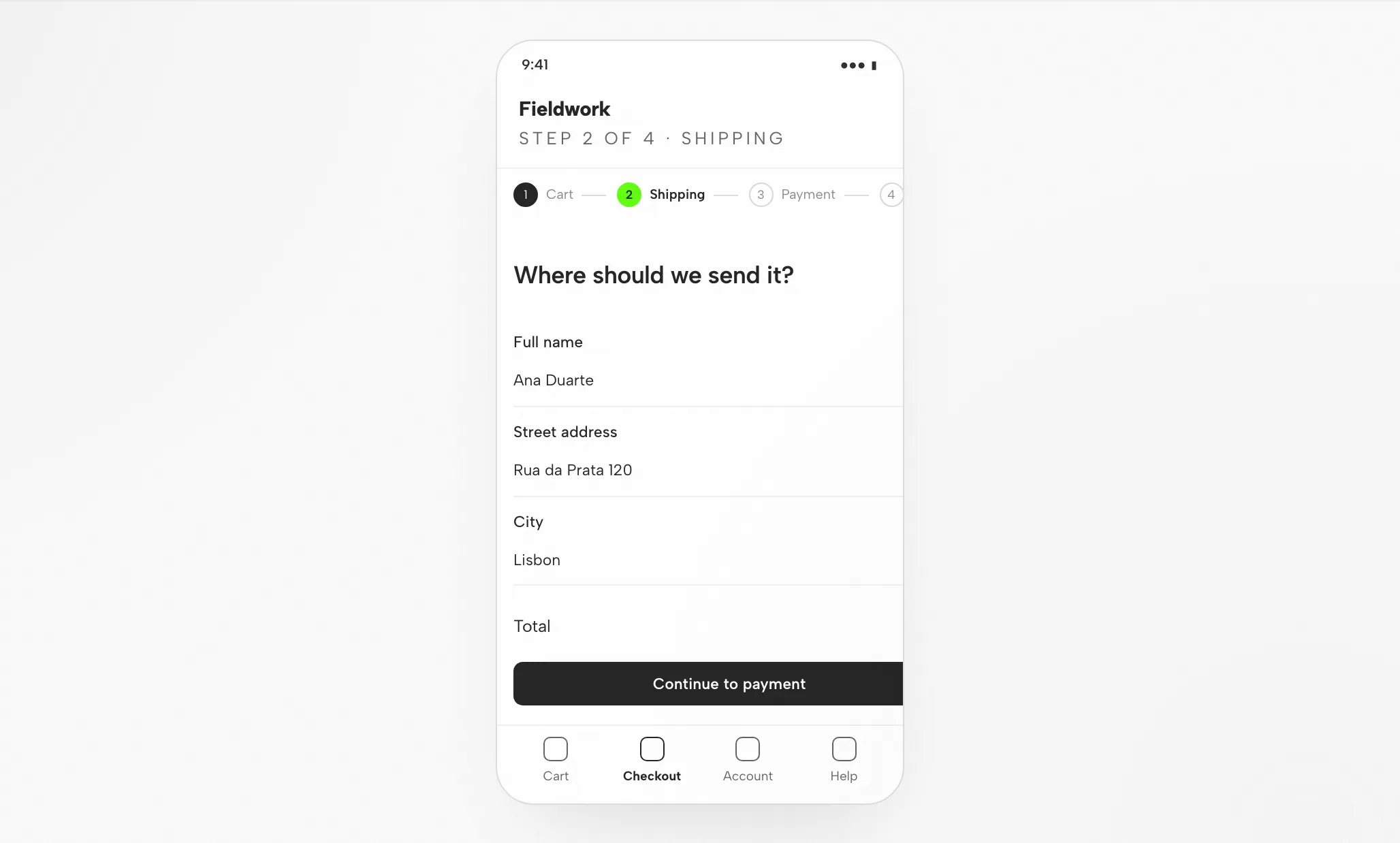
Form and summary on the 8px grid; the summary is sticky on desktop and collapsible on the phone.
The question, then fields, then the button; the accent marks the current step only.
Summary becomes a collapsed total line above the form; the button spans the width.
Trigger an address error, apply a promo code, go back to the cart.
Fit
Compatibility
This guide covers Kiro as connected through the OpenDesign desktop app. Published references checked on 6 September 2026.
Kiro is an agentic AI from Amazon (AWS) that ships as an IDE, a CLI, and a web interface, built for spec-driven development from prototype to production. It is in preview. This page is about designing interfaces with Kiro through OpenDesign, not about Kiro’s own interface. OpenDesign’s setup notes list the available agents.
AWS Builder ID, Google, GitHub, or AWS IAM Identity Center (no AWS account required). Authenticate with your AWS Builder ID or other sign-in — credentials stay on your machine. This page does not promise a quota or price.
Check the download page for desktop builds. The Node.js and pnpm requirements in the source quickstart apply to running from source, not to installing a desktop package. Minimum compatible Kiro version: not verified here.
Follow the connection instructions shown by your installed version, then run a small task. Confirm that Kiro handled it and that the artifact opens. A download alone does not establish a working connection.
Start with the desktop app
Download first, complete the Kiro setup for your installed version, then check a small result. You do not need to build OpenDesign from source to follow this path.
Choose the package for your computer, install it and open the app.
Download OpenDesignFollow the Kiro instructions in your installed version. Authenticate with your AWS Builder ID or other sign-in — credentials stay on your machine.
Kiro CLI documentation# 1. Install Kiro CLI (see kiro.dev/docs/cli for the macOS/Linux/Windows command)
# 2. Authenticate — opens your browser to complete sign-in
kiro-cli login # choose Builder ID, Google, GitHub, or your organization
# 3. Confirm you are signed in
kiro-cli whoamiFrom the Kiro setup notes in the published guide; check the vendor documentation for the current command.
Use a small brief so you can judge the whole loop, including one revision.
Build a settings screen with a profile form and a save confirmation. Use my design rules. Check it at desktop and mobile widths.
To run OpenDesign from source, follow the technical quickstart instead.
The Kiro design workflow
The same checkout flow task, followed from brief to verified file. Each step lists what you provide, what Kiro does, what OpenDesign contributes and what you check.
Plain language, three to six lines. Name the audience, the job of the screen and the platforms.
A design system and a few hard rules. This is what separates on-brand output from a generic look.
Kiro writes a self-contained HTML file: layout, styles, interactions and stable hooks.
The file renders inside OpenDesign at the widths you asked for. This is where the design is judged.
data-od-id targets for comments and edits.Request changes by pointing at elements in the preview. Every revision is a new file; nothing is overwritten silently.
Resources
Tutorials, documentation and walkthroughs for designing with Kiro, as listed in the published guide.
The artifact types Kiro can produce in OpenDesign, one skill per type.
Brand tokens and components to bind before Kiro generates anything.
Starting points for decks, landing pages and product screens.
Limitations
FAQ
Start with a small task, judge the round trip, then bring the real brief. Choose the option that matches your setup; the page does not detect it.